
Organizations rarely struggle with ideas. Most leadership teams invest significant effort in defining strategy, setting priorities, and articulating long-term goals. Yet even well-constructed strategies fail to produce results. The reason is not market conditions or employee resistance. It is the execution system that sits between intent and outcomes.
Execution failure is not accidental. It follows predictable patterns that leaders often underestimate or misdiagnose.
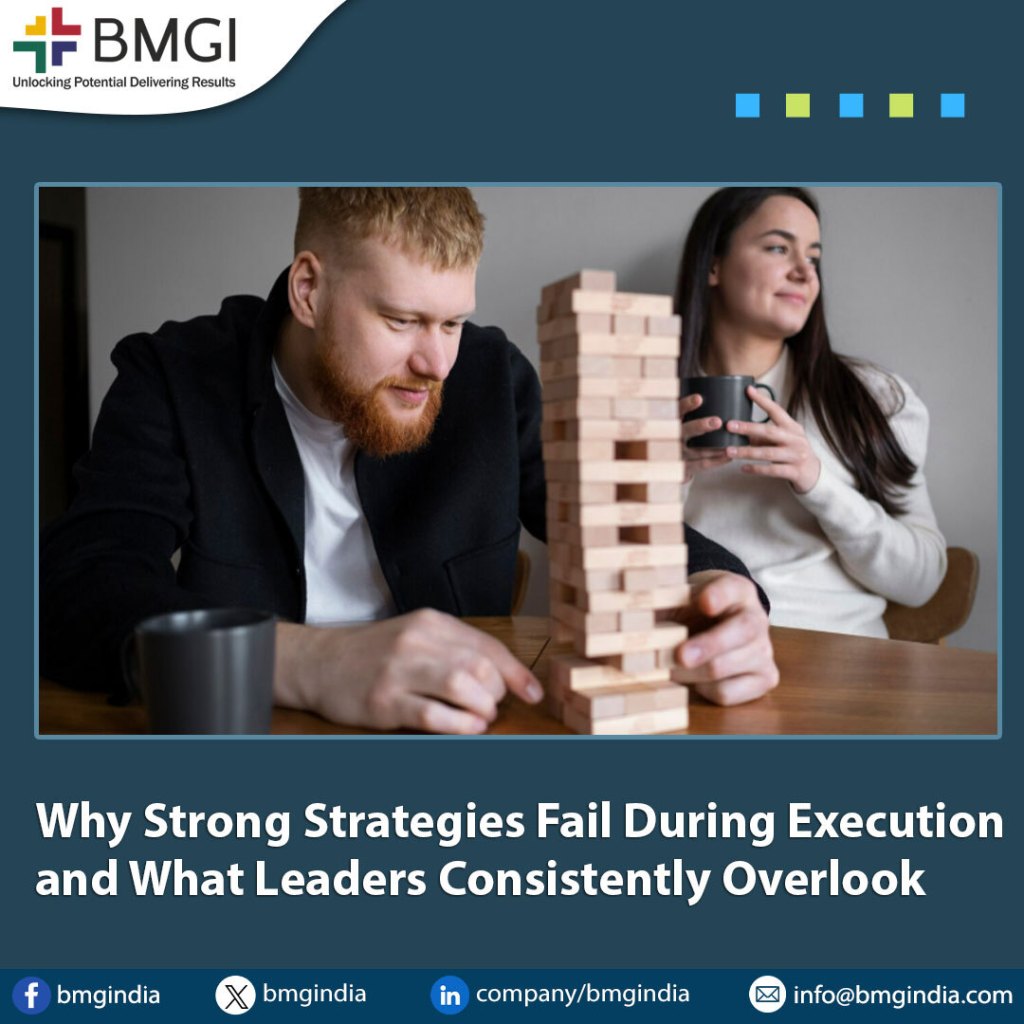
Strategy Breaks Down Where Work Actually Happens
Strategies are usually clear at the top. The breakdown begins as soon as they move into daily operations.
Typical execution gaps appear when:
- Strategic objectives are translated into too many initiatives
- Priorities change faster than processes can absorb
- Frontline teams are asked to execute without clarity on trade-offs
- Metrics track outcomes but not the behaviors driving them
When strategy does not reshape how work is planned, sequenced, and measured, it remains theoretical.
Leaders Overestimate Alignment and Underestimate Friction
Most leaders believe their organizations are aligned because messages are communicated frequently. In reality, alignment is not created through communication. It is created through operating systems.
Execution friction shows up as:
- Functional silos optimizing local goals
- Conflicting KPIs pulling teams in different directions
- Decision delays caused by unclear ownership
- Escalations that replace structured problem-solving
Without explicit alignment mechanisms, teams do what makes sense locally, even when it weakens system-level performance.
Execution Fails When Processes Cannot Absorb Change
Strategy often demands change in direction, speed, or scale. If underlying processes are unstable, change creates disruption instead of improvement.
Common signs include:
- Increased firefighting after strategic initiatives launch
- Declining throughput during transformation efforts
- Rising safety, quality, or rework issues
- Dependency on informal workarounds
Strong strategies fail when they are layered on top of weak processes.
Leaders Focus on Targets, Not Execution Capability
Targets create urgency. Capability determines results. Many organizations push harder without strengthening the system required to deliver.
This imbalance leads to:
- Short-term gains followed by performance decline
- Burnout among high performers
- Increased variation in outcomes
- Loss of credibility in leadership commitments
Execution capability is built through disciplined routines, stable processes, and consistent problem-solving, not pressure alone.
Strategy Reviews Ignore How Work Is Managed Daily
Most strategy reviews focus on progress against milestones and financial outcomes. They rarely examine how execution is actually happening.
Critical questions are often missed:
- Are processes defined clearly enough to support the strategy
- Where is variation increasing rather than decreasing
- Which constraints are limiting throughput today
- How often are the same problems recurring
Without visibility into daily management, leaders react too late to execution breakdowns.
Disciplined Execution Requires Explicit Trade-Offs
One of the most overlooked reasons strategies fail is the absence of clear trade-offs. Teams are expected to improve cost, quality, delivery, and flexibility simultaneously without guidance on what takes precedence.
High-performing organizations:
- Define non-negotiables clearly
- Make trade-offs explicit during disruptions
- Align incentives with strategic priorities
- Protect critical processes from constant reprioritization
Execution improves when teams understand not just what to do, but what not to do.
Problem-Solving Determines Strategy Longevity
No strategy survives unchanged. The difference between success and failure lies in how problems are handled once execution begins.
Weak execution cultures:
- Treat problems as exceptions
- Rely on experience-based fixes
- Accept recurring issues as normal
Strong execution cultures:
- Solve problems at their core
- Use data to guide decisions
- Redesign processes instead of managing symptoms
Over time, disciplined problem-solving becomes the mechanism through which strategy adapts without losing direction.
Execution Is a Leadership System, Not a Delegated Task
Execution failure is often attributed to middle management or frontline teams. In reality, execution quality reflects leadership design choices.
Leaders shape execution by:
- How priorities are set and protected
- How performance is reviewed
- How problems are escalated and resolved
- How consistency is reinforced over time
When leadership behavior aligns with structured execution systems, strategy becomes actionable rather than aspirational.
Why Execution, Not Strategy, Separates Performance
Markets reward organizations that can translate intent into results repeatedly. Strong strategies are common. Disciplined execution is not.
Organizations that close the execution gap:
- Connect strategy deployment directly to operational reality
- Reduce variation in critical processes
- Solve core business problems systematically
- Build resilience through process excellence
This is why execution capability, not strategic brilliance, determines long-term performance.
BMGI India works with leadership teams to strengthen execution systems, align strategy with daily operations, and build the disciplined processes required to convert strategic intent into sustained results.
 BMG India
Leave a comment